

TL;DR
- Kitchen cabinet refacing is usually better when the cabinet boxes are solid, the kitchen layout works, and the homeowner wants a fresh look without a full cabinet rebuild.
- Cabinet replacement is usually better when the cabinets are damaged, poorly laid out, too small, water-damaged, or part of a larger kitchen remodel.
- Refacing can cost less than replacement, but it does not fix a bad layout, poor storage, weak cabinet boxes, or hidden damage.
- In New Jersey, cabinet replacement may become part of a larger remodel if the project also includes countertops, backsplash, flooring, plumbing work, electrical work, or permits. Homeowners should also review local requirements through their municipality or the New Jersey Department of Community Affairs construction permit forms before starting work.
- Tona Home Improvement can help New Jersey homeowners decide whether refacing or replacement makes more sense based on cabinet condition, layout, budget, and remodel goals.
Quick Answer: Should You Reface or Replace Kitchen Cabinets in NJ?
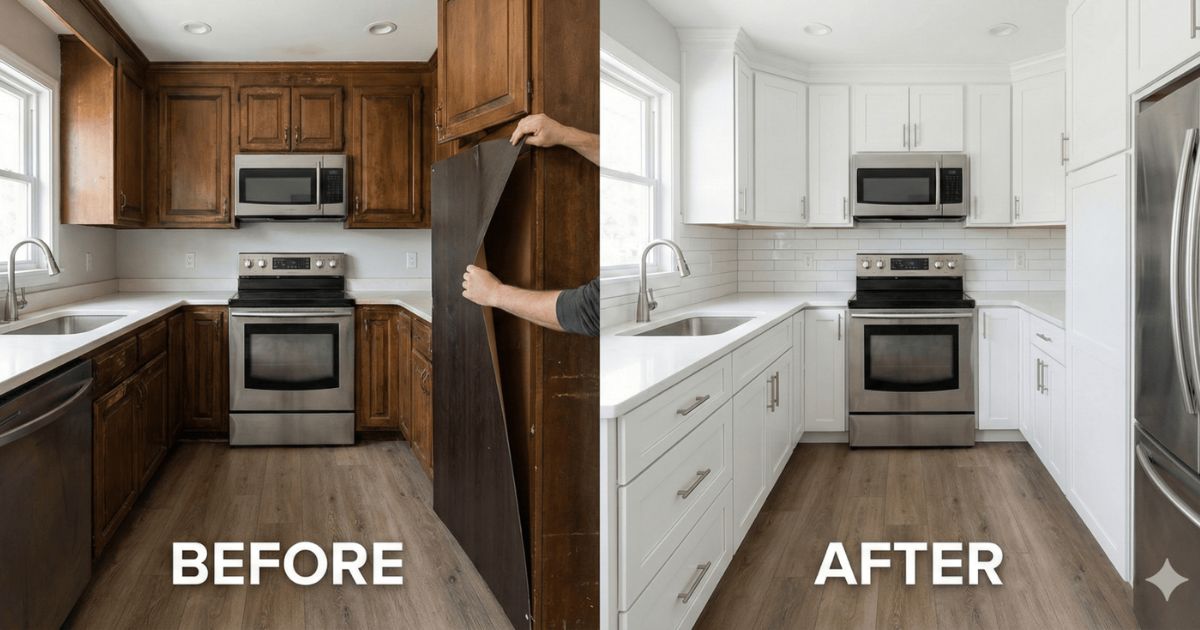
Kitchen cabinet refacing is the better choice in NJ when your existing cabinet boxes are strong, the layout works, and you only want to update the doors, drawer fronts, visible cabinet surfaces, hardware, and finish. Cabinet replacement is better when the cabinets are damaged, poorly designed, too small, or part of a full New Jersey kitchen remodeling project.
The easiest rule is this:
If the cabinet structure and layout are good, refacing may work.
If the cabinet structure or layout is bad, replacement is usually the better long-term choice.
Refacing can make old cabinets look new, but it does not change the cabinet footprint, storage layout, box condition, or kitchen workflow. Replacement costs more, but it gives homeowners more control over storage, layout, cabinet height, drawer function, appliance fit, and long-term durability.
What Is Kitchen Cabinet Refacing?
Kitchen cabinet refacing means keeping the existing cabinet boxes and updating the visible parts of the cabinets. This usually includes replacing cabinet doors, drawer fronts, hinges, hardware, and applying a new veneer or finish to the cabinet face frames and exposed sides.
Refacing can change the look of the kitchen without removing the entire cabinet system.
A cabinet refacing project may include:
- New cabinet doors
- New drawer fronts
- New hinges
- New cabinet hardware
- Veneer or laminate over exposed cabinet frames
- Side panel updates
- Crown molding or trim updates
- Soft-close hinge upgrades
- Minor drawer hardware upgrades
Refacing is not the same as painting. Painting keeps the same doors and drawer fronts. Refacing usually replaces the most visible cabinet surfaces while keeping the cabinet boxes in place.
What Is Cabinet Replacement?
Cabinet replacement means removing the existing cabinets and installing a new cabinet system. This can include new cabinet boxes, doors, drawers, hardware, panels, pantry storage, island cabinets, and a different cabinet layout.
Replacement gives the homeowner more control over the kitchen design.
A cabinet replacement project may include:
- Removing old cabinets
- Installing new cabinet boxes
- Installing new doors and drawers
- Changing cabinet layout
- Adding drawers instead of doors
- Adding pantry cabinets
- Adding taller upper cabinets
- Adding an island or peninsula
- Improving appliance fit
- Adjusting storage around the sink, stove, or refrigerator
Cabinet replacement is usually part of a larger kitchen remodel because it can affect countertops, backsplash, flooring, plumbing, electrical work, and appliance placement.
Cabinet Refacing vs Replacement: Main Difference
The main difference is simple: refacing changes how the cabinets look, while replacement changes how the cabinets look and function. Refacing keeps the existing cabinet layout. Replacement allows the kitchen layout and storage system to change.
| Feature | Cabinet Refacing | Cabinet Replacement |
| Cabinet boxes | Kept | Removed and replaced |
| Doors and drawer fronts | Replaced | Replaced with full cabinet system |
| Layout | Usually stays the same | Can change |
| Storage function | Limited improvement | Major improvement possible |
| Cost | Usually lower | Usually higher |
| Timeline | Usually faster | Usually longer |
| Best for | Solid cabinets with outdated style | Damaged cabinets or poor layout |
| Countertop impact | May be limited | Usually affects countertops |
| Plumbing/electrical impact | Usually limited | Can increase if layout changes |
Refacing is a surface-level cabinet solution. Replacement is a full cabinet system solution.
Kitchen Cabinet Refacing Cost in NJ
Kitchen cabinet refacing in NJ can vary widely based on kitchen size, material choice, door style, hardware, labor, and finish level. Home Depot lists an average cabinet refacing project cost around $15,000 based on 27 linear feet of cabinets in a 200-square-foot kitchen, including materials, installers, and project management.
Other 2026 cabinet refacing cost guides list common refacing ranges around $4,000 to $13,000 for many kitchens, with larger or higher-end projects reaching $15,000 to $20,000 depending on material and scope.
For New Jersey homeowners, refacing cost usually depends on:
- Number of cabinet doors
- Number of drawer fronts
- Linear feet of cabinets
- Door style
- Veneer or laminate material
- Hardware selection
- Soft-close upgrades
- Trim and molding
- Labor rate
- Kitchen access and condition
Refacing is not always cheap. It is usually less than full replacement, but the cost can rise when the kitchen is larger, the material is higher-end, or the project includes many custom details.
Kitchen Cabinet Replacement Cost in NJ
Kitchen cabinet replacement in NJ usually costs more than refacing because it involves removing the old cabinet system and installing new cabinet boxes, doors, drawers, panels, hardware, and trim. Replacement may also affect countertops, flooring, backsplash, plumbing, and electrical work.
Cabinet replacement cost depends on:
- Stock, semi-custom, or custom cabinets
- Kitchen size
- Cabinet layout
- Number of drawers
- Pantry cabinets
- Island cabinets
- Cabinet height
- Material quality
- Hardware
- Installation labor
- Removal and disposal
- Countertop changes
- Backsplash and flooring changes
Replacement is more expensive, but it solves problems refacing cannot solve. If the kitchen lacks storage, has damaged boxes, has poor drawer function, or does not fit modern appliances, replacement is often the better investment.
When Cabinet Refacing Makes Sense
Cabinet refacing makes sense when the cabinet boxes are solid, the layout works, and the homeowner wants a cleaner, newer look without rebuilding the kitchen. This is common when the kitchen feels dated but still functions well.
Refacing may be a good choice if:
- The cabinet boxes are strong.
- The cabinet layout works.
- Storage is acceptable.
- Drawers open and close properly.
- There is no major water damage.
- There is no mold or structural damage.
- Appliance locations are staying the same.
- Plumbing and electrical work are limited.
- The homeowner wants a faster update.
- The budget does not support full replacement.
Refacing works best when the problem is style, not structure.
For example, if the cabinets are solid but the doors look dated, refacing can update the kitchen without removing the entire cabinet system.
When Cabinet Replacement Is Better
Cabinet replacement is better when the existing cabinets are damaged, poorly laid out, too small, cheaply built, water-damaged, or no longer fit the way the kitchen is used. Replacement is also better when the homeowner wants to change the kitchen layout.
Replacement is usually the better choice if:
- Cabinet boxes are weak or sagging.
- Doors do not align properly.
- Drawers stick or fail.
- There is water damage under the sink.
- There is mold or odor inside cabinets.
- The layout wastes space.
- Storage is not enough.
- Appliances do not fit well.
- The homeowner wants taller cabinets.
- The remodel includes wall removal or layout changes.
- Countertops and backsplash are being replaced anyway.
Refacing damaged cabinets can waste money. If the cabinet system is already failing, new doors and veneer will not fix the real problem.
Refacing Does Not Fix a Bad Kitchen Layout
Cabinet refacing does not fix a bad kitchen layout because the cabinet boxes stay in the same place. If the kitchen has poor workflow, limited storage, awkward appliance placement, or a cramped layout, refacing only changes the appearance.
Refacing will not solve these problems:
- Poor sink location
- Poor refrigerator placement
- Not enough drawers
- Wasted corner space
- Low cabinet height
- Poor pantry storage
- Awkward appliance clearances
- Bad traffic flow
- Not enough counter space
- Cabinets that block the room
This is important in many New Jersey kitchens, especially older homes, townhomes, condos, and compact layouts where storage and workflow already feel limited. Kitchen layout decisions should consider clearances, appliance access, counter frontage, and local code requirements. The NKBA kitchen planning guidelines are a useful reference for understanding how cabinet layout, counters, appliances, and access standards affect kitchen function.
If the layout is the main problem, replacement is usually the better option.
Refacing vs Replacement for Small NJ Kitchens
For small NJ kitchens, refacing can work well if the existing layout already uses the space efficiently. If the kitchen is small because the storage layout is poor, replacement may create more value than refacing.
Small kitchens need careful cabinet planning.
Replacement may help create:
- Taller upper cabinets
- More drawers
- Pull-out pantry storage
- Better corner storage
- Better appliance clearances
- Better sink base planning
- More usable counter space
- A cleaner cabinet layout
Refacing may help when the small kitchen already works but looks outdated.
In cities and towns with compact kitchens, such as Cliffside Park, Englewood, Clifton, West New York, Jersey City, and nearby North Jersey areas, the decision should be based on both appearance and storage function. Homeowners in nearby county markets can also review local kitchen remodeling options in Bergen County, Hudson County, Essex County, Union County, Morris County, and Sussex County.
Refacing vs Replacement When Selling a Home
Cabinet refacing can make sense before selling if the existing cabinets are solid and the goal is a cleaner appearance without a full kitchen remodel. Replacement may make more sense if the cabinets are visibly damaged, poorly laid out, or likely to hurt buyer confidence.
For resale, the right choice depends on the home.
| Situation | Better Choice |
| Cabinets are solid but dated | Refacing may work |
| Cabinets are damaged | Replacement is better |
| Kitchen layout works | Refacing may work |
| Layout is poor | Replacement is better |
| Home is being listed soon | Refacing may control cost |
| Home is higher value | Replacement may fit buyer expectations |
| Countertops are also being replaced | Replacement may be worth considering |
| Storage is poor | Replacement is usually better |
A kitchen does not need the most expensive cabinets to sell well. It needs to look clean, function properly, and fit the value of the home.
Refacing vs Replacement With Countertops
Countertops can affect the cabinet decision because countertop installation depends on the cabinet base. If the existing cabinet boxes are staying and are level, refacing may work with new countertops. If the boxes are weak, uneven, or poorly arranged, replacing countertops over them may be a mistake.
Before installing new countertops, check:
- Are the cabinet boxes strong?
- Are the cabinets level?
- Is there water damage near the sink?
- Is the layout staying?
- Are appliance openings correct?
- Will the countertop fit the current cabinet footprint?
- Will the cabinets support the countertop material?
Stone and quartz countertops need a stable base. If the cabinet boxes are not strong enough, replacement may be the safer long-term choice.
Refacing vs Replacement Timeline
Cabinet refacing usually takes less time than cabinet replacement because the cabinet boxes stay in place. Replacement usually takes longer because the old cabinets must be removed, new cabinets installed, and related surfaces adjusted.
| Project | Typical Timeline |
| Cabinet painting | Shorter |
| Cabinet refacing | Usually faster than replacement |
| Stock cabinet replacement | Medium |
| Semi-custom cabinet replacement | Longer |
| Custom cabinet replacement | Longest |
Replacement can also add time for:
- Cabinet ordering
- Demolition
- Disposal
- Wall repairs
- Flooring transitions
- Countertop templating
- Backsplash work
- Plumbing adjustments
- Electrical adjustments
If timeline is the main concern and the cabinets are structurally sound, refacing may be the better fit.
Permit Questions for Cabinet Refacing and Replacement in NJ
Cabinet refacing by itself may have lower permit risk because it usually keeps cabinet boxes, plumbing, electrical work, and walls in place. Cabinet replacement may raise permit questions if the project changes plumbing, electrical systems, walls, structure, or kitchen layout.
Permit questions become more likely when cabinet work includes:
- Moving the sink
- Moving the dishwasher
- Adding outlets
- Adding under-cabinet lighting with new wiring
- Opening walls
- Removing walls
- Changing gas lines
- Changing ventilation
- Full gut remodeling
Replacing cabinets in the same footprint may be simpler than changing the full kitchen layout. Still, New Jersey homeowners should confirm the exact scope with the local construction office before starting work.
Questions to Ask Before Choosing Refacing or Replacement
The best way to choose between cabinet refacing and replacement is to inspect the cabinet condition, layout, storage, budget, and larger remodel scope. A homeowner should not choose based on price alone.
Ask these questions:
- Are the cabinet boxes solid?
- Is there water damage under the sink?
- Do drawers work properly?
- Does the layout work?
- Is there enough storage?
- Are appliance openings correct?
- Will countertops also be replaced?
- Will plumbing or electrical move?
- Are walls being removed?
- Is the goal resale or long-term living?
- Does the cabinet style fit the rest of the home?
If most answers are about style, refacing may work. If most answers are about function, replacement is usually better.
When to Call a Kitchen Remodeling Contractor
You should call a kitchen remodeling contractor when the cabinet decision affects countertops, backsplash, flooring, plumbing, electrical work, layout, or permits. A contractor can inspect the cabinet boxes and help decide whether refacing or replacement fits the project.
A contractor is especially useful when:
- You are replacing countertops.
- You are changing the cabinet layout.
- You are moving plumbing.
- You are adding electrical work.
- You are remodeling an older NJ kitchen.
- You are updating a small kitchen.
- You are planning a full renovation.
- You need a clear cost comparison.
Tona Home Improvement helps New Jersey homeowners plan kitchen remodeling projects based on cabinet condition, layout, budget, material choices, and project scope. The right cabinet decision should support the whole kitchen, not only the cabinet appearance.
Related Kitchen Remodeling Resources
- Kitchen Remodeling New Jersey
- Kitchen Remodeling Cost in New Jersey
- Can You Remodel a Kitchen for $20K in NJ?
- Small Kitchen Remodel Cost in NJ
- Do You Need a Permit to Remodel a Kitchen in NJ?
- How Long Does a Kitchen Remodel Take in NJ?
- Kitchen Remodeling Ideas for Bergen County Homes
- Kitchen Remodeling in Cliffside Park, NJ
Frequently Asked Questions About Cabinet Refacing vs Replacement in NJ
Is it better to reface or replace kitchen cabinets in NJ?
It is better to reface kitchen cabinets if the cabinet boxes are solid, the layout works, and the homeowner wants a new look. It is better to replace cabinets if the boxes are damaged, storage is poor, or the kitchen layout needs to change.
Is cabinet refacing cheaper than replacement?
Cabinet refacing is usually cheaper than full cabinet replacement because the existing cabinet boxes stay in place. The savings depend on kitchen size, door style, material choice, hardware, labor, and whether the project includes other kitchen updates.
What does cabinet refacing include?
Cabinet refacing usually includes new cabinet doors, new drawer fronts, new hinges, new hardware, and veneer or laminate applied to visible cabinet frames and sides. The existing cabinet boxes stay in place.
When should kitchen cabinets be replaced instead of refaced?
Kitchen cabinets should be replaced instead of refaced when the cabinet boxes are damaged, sagging, water-damaged, moldy, poorly built, or poorly arranged. Replacement is also better when the kitchen layout or storage needs to change.
Can I reface cabinets and replace countertops?
Yes, you can reface cabinets and replace countertops if the cabinet boxes are strong, level, and able to support the new countertop material. If the cabinet boxes are weak or uneven, cabinet replacement may be safer before installing new countertops.
Does cabinet refacing change the kitchen layout?
No, cabinet refacing does not usually change the kitchen layout. It updates the visible cabinet surfaces while keeping the existing cabinet boxes in place. If the layout needs to change, cabinet replacement is usually the better option.
Do I need a permit to replace kitchen cabinets in NJ?
You may not need a permit to replace cabinets in the same footprint if there are no structural, plumbing, or electrical changes. Permit requirements become more likely if the cabinet replacement is part of a larger remodel with plumbing, electrical, wall, or layout changes.
Is cabinet refacing worth it before selling a home?
Cabinet refacing can be worth it before selling if the cabinets are solid but look outdated. It can improve appearance without the cost of full replacement. If the cabinets are damaged or poorly laid out, replacement may make more sense.
How long does cabinet refacing take?
Cabinet refacing usually takes less time than cabinet replacement because the existing cabinet boxes stay in place. The timeline depends on kitchen size, material availability, door style, hardware, and installation schedule.
How do I know if my cabinet boxes are good enough for refacing?
Cabinet boxes may be good enough for refacing if they are solid, level, dry, free of water damage, and securely attached. If the boxes are swollen, warped, sagging, moldy, or poorly built, replacement is usually the better choice.
Final Takeaway
Kitchen cabinet refacing vs replacement in NJ comes down to condition and layout. Refacing is a good option when the cabinet boxes are solid, the layout works, and the homeowner mainly wants a fresh look. Replacement is better when the cabinets are damaged, storage is poor, or the kitchen needs a new layout.
For New Jersey homeowners, the smartest first step is to inspect the cabinet boxes before choosing. Tona Home Improvement can help determine whether refacing or replacement fits the kitchen’s budget, layout, materials, and long-term remodeling goals.